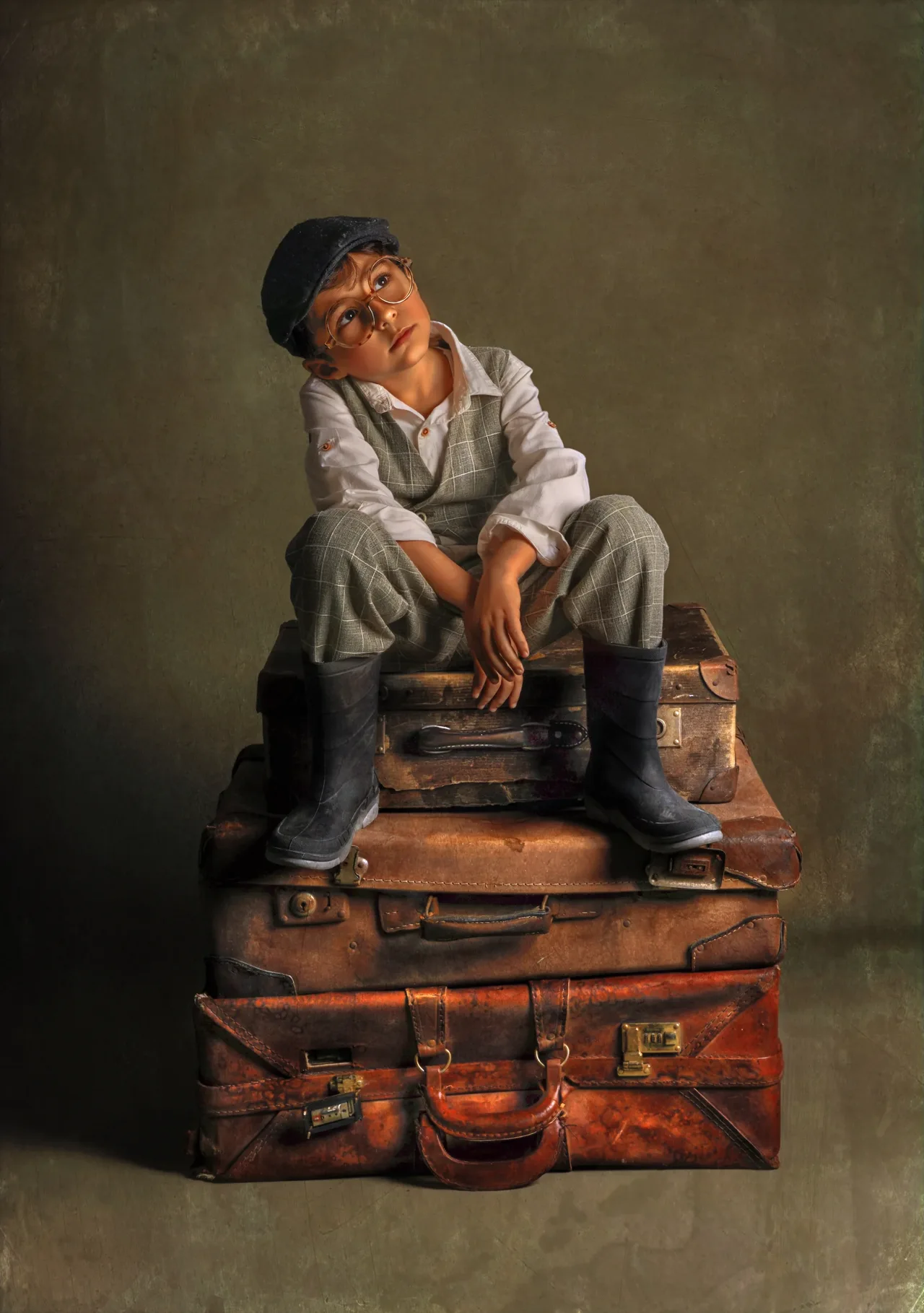
A child’s portrait can be playful, thoughtful, bold or quiet. It does not need a large smile in every frame to feel full of personality. When thinking about a session, begin with the child you know rather than a pose you hope to reproduce.
Choose a mood together
If your child enjoys imagining stories, a colour or a simple character can be a way into the idea. If they prefer something straightforward, a portrait with fewer visual elements can feel equally personal. You do not need a complicated explanation for the session to have meaning.
A reference photograph can help you describe the look to the studio. It should not become a promise that your child will make the same expression or hold the same pose. Use it to discuss the setting and atmosphere, while leaving space for their own response.
Keep the plan manageable
Consider the number of setups and the listed session time together. More photographs or more themes create a different plan; they do not automatically make a better fit for every child. Choose the package around what you actually want to keep from the day.
Share practical details that could help the studio understand the session, including who is attending and which outfits you hope to use. Where a package includes studio clothing, follow its outfit allowance. Additional changes within one theme are not part of the studio’s agreed wardrobe arrangement.
Start with what is familiar to your child
A familiar interest can be a useful way to begin thinking about a portrait. It might be a book they return to, a colour they keep choosing or a small object they like to carry. You do not need to build the entire scene around that interest. It can simply help you describe the atmosphere you imagine or provide a point of connection when explaining the session. The aim is to make the idea understandable without turning the child into a character they are expected to perform.
Keep the explanation suited to the child rather than delivering a long list of instructions. You can talk about going to a studio, choosing a look and having some photographs made. What matters is that the description is honest about the experience you have booked. Avoid promising a particular set, prop or activity that has not been agreed with the studio. If a detail is especially important to the child, mention it during planning so you can understand whether it belongs in the actual session.
Choose references without choosing an expression
References can explain the look of the photograph, but they are less useful as instructions for a child’s exact expression. You might be drawn to the colour of a background, the shape of an outfit or the sense of space around a sitter. Point out those qualities to the studio. This leaves room for your child to respond to the scene in their own way. A portrait can share the atmosphere of a reference while having a completely different personality, which is often what makes it feel personal.
Try looking at the reference with the face temporarily out of your attention. Ask what remains appealing about the picture. Then look at the child in the image and consider whether you are expecting your own child to act in the same way. That small exercise can separate a useful visual direction from an unrealistic performance expectation. When you share the reference, explain the distinction. You can like a thoughtful portrait without asking a child to manufacture seriousness, just as you can enjoy a playful scene without requiring constant laughter.
Give clothing and personal items a clear role
Choose clothing as part of the whole portrait rather than as a separate event. A strong colour or an elaborate shape can be beautiful, but it also changes what the picture is about. Think about whether you want the child’s expression, the set or the clothing to lead. If more than one child or an adult will appear in the photograph, consider the clothes together. They do not have to match exactly. It can be enough for the colours and shapes to feel comfortable in the same frame.
Where studio outfits are included, the package allowance provides the plan. Each theme has one outfit per person, and an additional change within that theme is not available. If someone else in an Indoor photograph wants a studio outfit, the agreed additional person charge applies. Personal items should also be discussed before the day. A favourite object can be meaningful without appearing in every image. Choose it because it belongs to the child’s story, then consider how much attention you want it to receive.
Decide what makes a photograph worth keeping
When you think about a successful portrait, make room for recognisable details beyond a smile. The angle of a head, a familiar look of concentration or the way two siblings relate to each other can become the reason an image matters later. These qualities are personal. A technically composed or visually elaborate image may still be less meaningful to you than one that feels immediately like your child. Knowing that preference helps you describe what you value before the session begins.
Consider how the selected photographs will work as a collection. You may prefer several expressions within one setting, or a smaller number of contrasting looks across the package’s themes. Look at the actual photo and print counts when comparing the options. More images are not automatically a better record of personality if they all say the same thing. A thoughtful collection can hold both a composed portrait and an unexpected expression, giving you different ways to remember the child at this particular moment.
Let a meaningful detail stay small
A favourite book or familiar object may belong in the portrait, but it does not have to lead every photograph. Choose one or two things to discuss with the studio rather than building a long list of required props and poses.
An ordinary expression can be worth keeping. A thoughtful look, a small gesture or the way a child holds an object may feel especially recognisable later. The value of the portrait can come from that familiarity as much as from the scene around it.
Look beyond a single perfect frame
When considering a collection, notice what each photograph adds. One may feel open and playful; another may be composed and still. A few different expressions can tell a fuller story than several nearly identical pictures. The aim is to recognise your child in the finished work, with enough room for the personality that made the session theirs.
Continue with the session details and the current offer.
Explore studio sessions