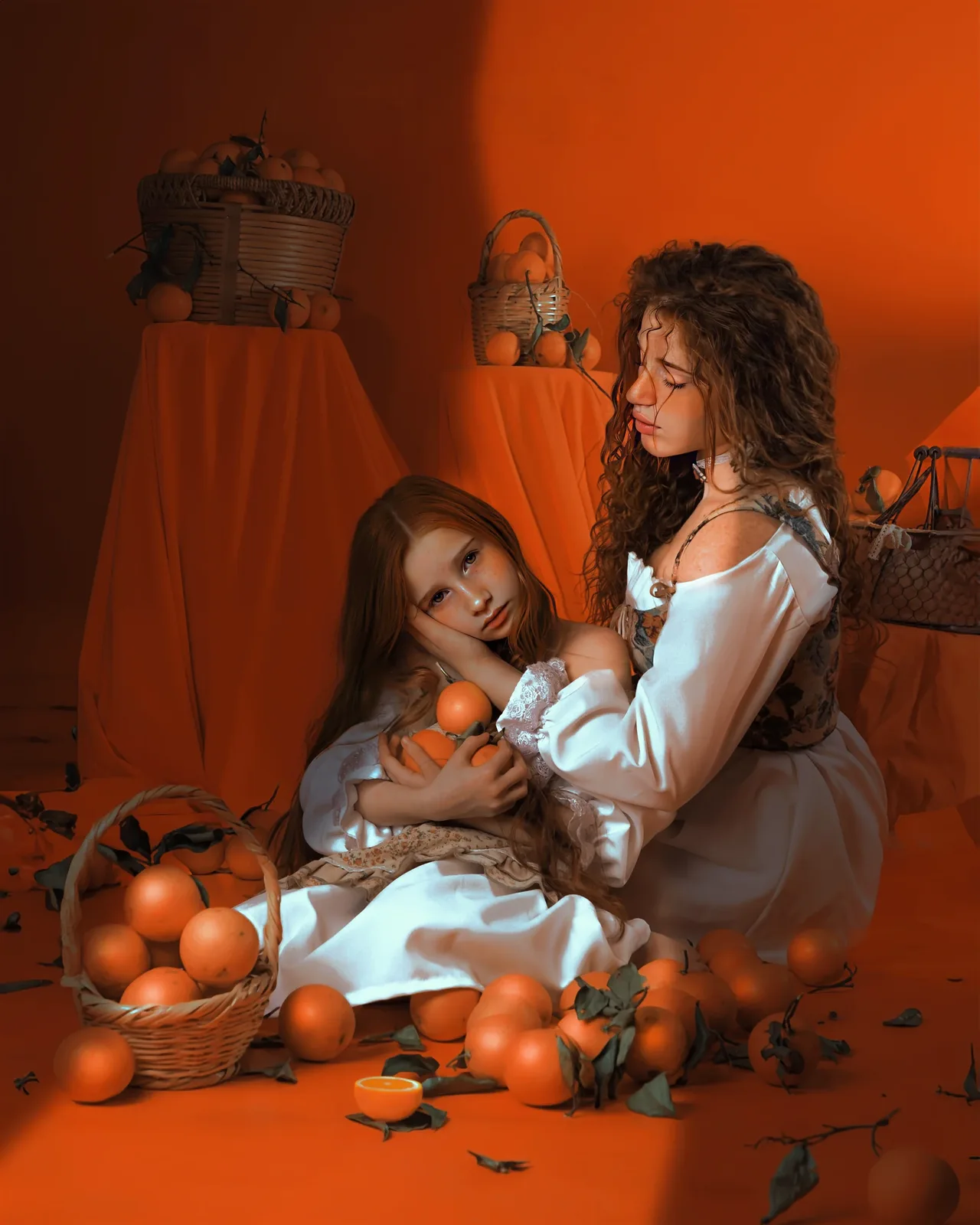
A portrait concept does not need a complicated story. Sometimes a colour, a gesture or the relationship between two people is enough. Giving that idea a clear shape helps the photograph feel considered without requiring every part of it to announce itself.
Begin with something specific
Instead of starting with a broad word such as magical, describe what you imagine seeing. It could be a figure surrounded by folds of fabric, a quiet pairing of warm colours, or an object that belongs to a personal memory. Specific details make it easier to discuss the idea.
A reference image can help, but the reason you chose it matters more than copying its contents. Point out the aspect that speaks to you. The light, the posture and the space in a photograph may suggest different directions even when they appear in the same reference.
Give every element a role
Clothing can establish a shape. A background can create a sense of place. An object can hold a personal association. When several elements compete to explain the image, it can become harder to notice the person at its centre.
Try describing the portrait in one sentence. If that sentence contains many separate ideas, decide which one should lead. This is a way of concentrating the concept, not a rule that the finished picture must be minimal. A richly detailed scene can still have a clear subject.
Make a personal starting point visible
A personal idea becomes easier to discuss when you describe the visible detail that might carry it. If you want to express closeness, you could be drawn to the space between two people, the way they turn towards each other or a repeated colour in their clothes. If the idea is independence, you might imagine a single figure with space around them. These are possibilities for a conversation, not a fixed vocabulary. The meaning comes from why the choice feels relevant to the person being photographed.
Try writing the idea without using photography terms. Describe a memory, an atmosphere or a relationship in ordinary language. You can then return to your references and see which ones share that quality. This approach avoids beginning with an elaborate scene that has no personal connection beyond being visually impressive. It also gives the studio something more useful than a demand to make a photograph look expensive or artistic. The concept has a subject, and the visual choices can grow from it.
Think in relationships rather than isolated details
Colours, textures and shapes are easier to consider as relationships. A richly textured garment may have a different presence against a quiet background than against a busy one. Two colours can feel connected because they sit close together, or because the contrast between them is deliberate. You do not need to decide the exact answer before the session is planned. It helps simply to notice which relationships in your references make the image feel coherent and which details you could leave behind.
The same is true of objects. An object can be a point of attention, a suggestion of a story or a small detail that becomes meaningful on a second look. If every object is intended to be the main point, the concept can lose its centre. Consider what the viewer should notice first and what should be discovered afterwards. A full scene can still be clear when the parts share a hierarchy. That hierarchy should support the person and the idea rather than turning the portrait into an inventory.
Discuss a portrait with more than one person
When several people appear together, the relationship between them becomes part of the composition. Think about how you want that relationship to feel. A close pairing, a more formal grouping and a playful interaction offer different starting points. You may have a particular gesture in mind, or simply want the photograph to preserve a familiar connection. Explain that intention before focusing on matching clothes. The clothing can support the relationship, but it cannot explain the whole meaning of being photographed together.
The example photographs show creative possibilities; they do not change the package terms. The Indoor Fine Art Golden package is written for one person and contains a stated fee when more people are included in the same photograph. If you are planning a group, discuss the actual people and intended images with the studio so the applicable arrangement is clear. Do not infer a free additional sitter from an image of two people, or transfer a rule from Indoor Fine Art to another offer without checking its own details.
Give the final selection a common thread
A small Fine Art collection can have variation without becoming a collection of unrelated ideas. Look for a shared atmosphere across the chosen images, then notice what makes each photograph worth keeping. One might hold the strongest expression, another a different relationship between the figure and the setting. A change in composition can reveal something new while the concept remains the same. This is why the idea and the number of delivered images should be considered separately when discussing the session.
Think about how you might display the work as well. A single photograph on a wall and a group of prints seen together invite different kinds of attention. The listed package prints and frame give you a concrete starting point for that thought. You do not need to design a room around the session, but it can be useful to know whether you imagine one image leading or several being viewed as a sequence. The concept should be strong enough to hold attention and personal enough to remain meaningful beyond its first impression.
A concept can hold several portraits
One concept does not mean one delivered photograph. Parapluie’s Indoor and Outdoor Fine Art Golden packages each list three edited photographs, one setup and one outfit, with the stated prints and framed photo. The shared setting gives the collection a relationship; the selected photographs can still have different expressions or compositions.
Read the relevant package before planning additional people or another look. The Indoor Fine Art offer includes a written group fee rule. Package details should guide the session plan rather than being inferred from an example photograph.
Leave room for the person
References are a beginning, not a script for someone else’s face. A concept becomes personal through the person in it: how they hold themselves, what an object means to them, or the connection they share with another sitter. Bring the idea you care about, along with the freedom to let the final portrait belong to you.
Continue with the session details and the current offer.
Explore Fine Art portraits